
On growing old, differently..
When we’re younger, life often feels distant from structure.
You move through it more freely, without fully thinking about what it will eventually ask of you. Time just seems to pass and there’s a sense that things will come together in time, even if you don’t yet know how.
You follow what feels natural in the moment. Time feels open, decisions feel lighter, and the future exists more as an idea than something you need to define.
There’s space to explore, to change direction, to not have everything figured out. But slowly, almost without noticing, that distance begins to close.
Maybe this is what they call “adulting” — somewhere between choosing what to have for dinner every day and realising no one is coming to make those decisions for you.
Here, expectations become clearer. Questions become more direct and conversations shift from what could be, to what should be.
You begin to feel the shape of adulthood forming around you — not suddenly, but gradually, through small moments, decisions, and the quiet awareness that time is moving forward.
We’re a small brand, and many of us are still young, figuring this out in real time. Through our peers and the people who move through the space each day, we see this shift up close.
It shows up in conversation, in passing comments, in the way people speak about what they want, what they’re unsure of, and what they’re trying to make sense of.
In many ways, like much of the structures of other brand itself these reflections come from that — from noticing, and from recognising parts of it in ourselves too.
Traditionally, most of us grow into life with a shared understanding of how it will be. You marry, you build a life together as a unit, and over time you grow old with one person.
If you’re younger than us, you might not have reached that stage yet, but you’re likely already trying to find your way through it — figuring out what your life might look like as you move further into it, and which parts of that structure feel right to you, or begin to shift.
It’s part of the quiet weight that comes with becoming an adult.
If you’re further along than we are, you’ve likely already moved through parts of this, and might recognise some of what we’re noticing — perhaps in ways we’re only just beginning to understand.
This way of thinking isn’t always something we’re told directly, but something we absorb over time and through the lives we see around us.
It becomes familiar without needing to be explained, almost like something that has already been decided for us — the idea that you will meet someone, build a life together, and eventually grow old side by side.
But lately, what we’ve been noticing — in conversation, in passing moments, and in the way people speak about their lives — is that this outlook feels less certain for many.
Not completely gone, but loosened, and less central than it once was..
More people are living in ways that don’t follow traditional patterns.
Some choose to live alone, while others move between places, routines, and relationships that don’t centre around one person in the same way as before.
There are fewer people getting married, even more people separating, and many building lives that feel less defined, or at least less structured around a single path…
And yet, despite that, it doesn’t always feel like people are alone.
Instead, something else seems to be forming.
Friendships are taking on a different kind of presence, moving with people through different stages of life, through change, through distance, and still remaining..
People are building connections that don’t always follow a clear structure, but still carry a sense of consistency. Groups form and reform — not fixed, but still familiar.
Unlike traditional partnerships, friendships don’t always come with clearly defined roles or expectations.
They don’t demand exclusivity, and they don’t follow a set timeline but they hold something steady in a way that becomes more noticeable over time.
You begin to see how much they carry — not always in obvious ways, but in the background of people’s lives.
Support that isn’t always named, consistency that isn’t always acknowledged, and a sense of belonging that isn’t tied to one person alone. These are things we once expected a single relationship to hold, but are now often shared across many.
At the same time, people are living longer, but not necessarily within the same structures that once defined what growing older looked like.
So the question begins to shift..
If life is no longer built around one central relationship, what does it begin to centre around instead?
Who do we rely on over time, who stays as things change, and what becomes familiar enough for us to keep returning to?
There isn’t a clear model for this yet. Much of the world is still shaped around the idea of couples — in how we think about housing, care, and even responsibility — but the way people are living is beginning to move differently.
Less linear, less fixed, and more connected in quieter, more distributed ways.
Maybe growing older isn’t about building a life around one person.
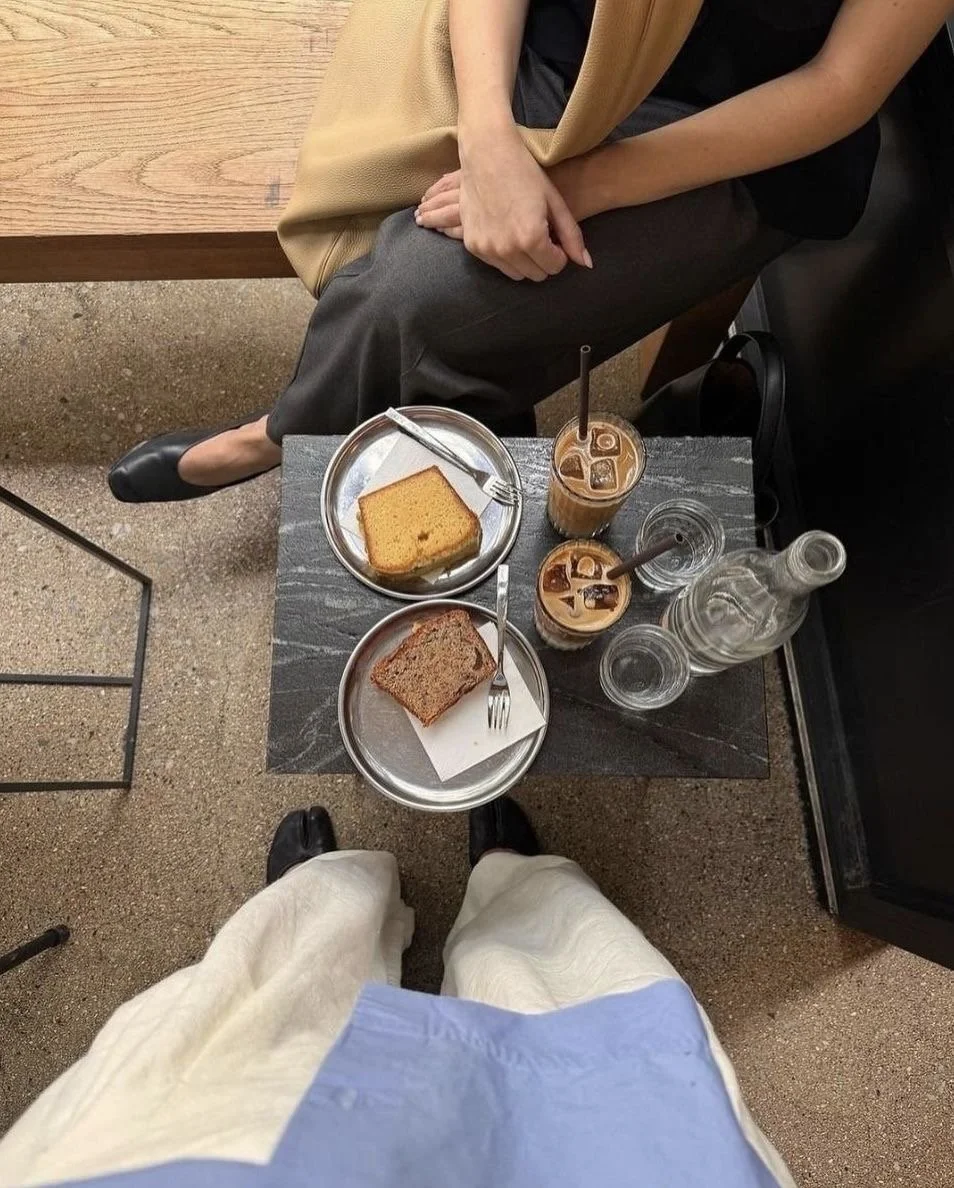
Maybe it’s about a collection of people, a network that shifts but still holds, and relationships that carry different things at different times. It’s not always clear, and it’s not always easy to define, but it doesn’t feel as empty as we once imagined.
And perhaps growing older now is less about following a structure, and more about learning how to recognise what is already taking shape around us — a sense of community.